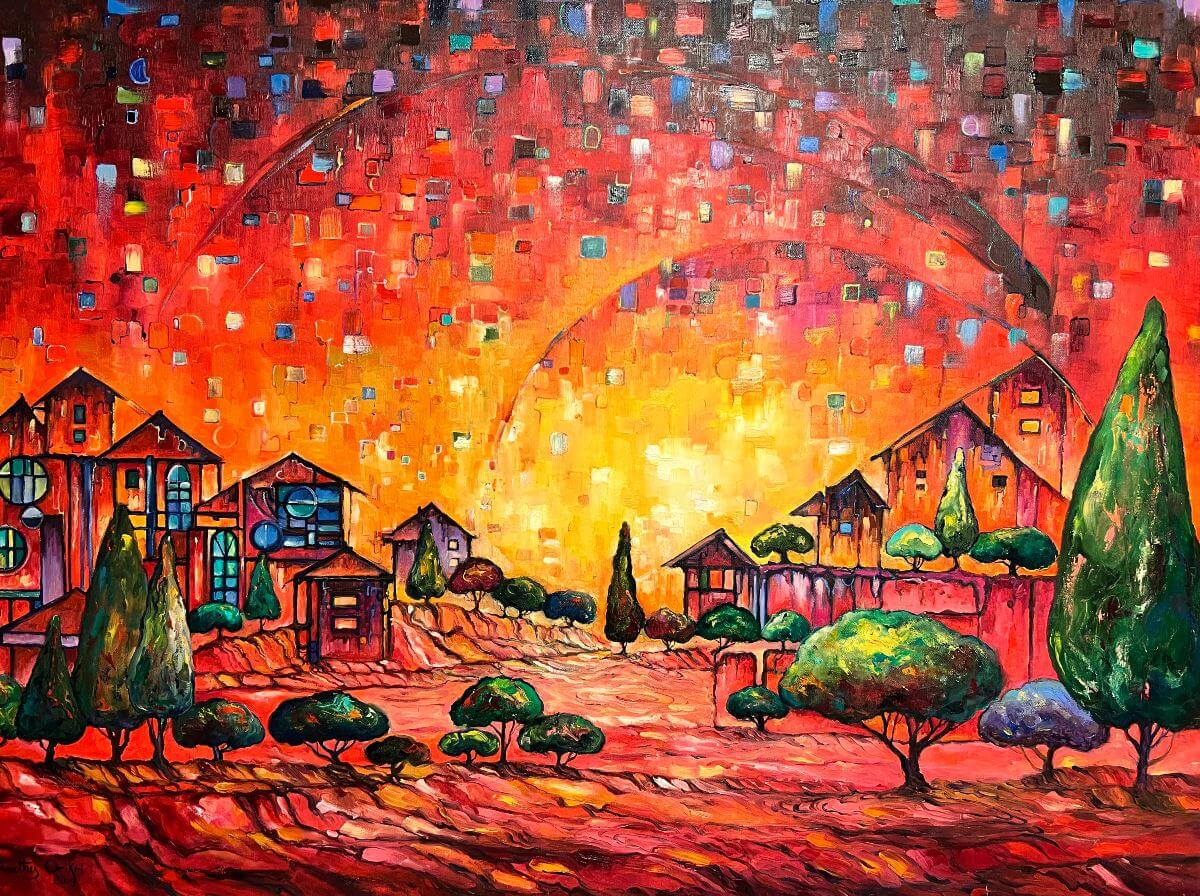
The morning sun rose over the farmland like a great golden egg cracked open across the sky.
Councilman Timothy stood beside his bicycle, checking the tires and adjusting his cap.
“Come along, Mr. Froggy!” he called toward the little cottage with the yellow shutters. “If we leave now, we’ll make it in time for the game.”
Inside the house came the sound of drawers opening, closets rattling, and what sounded suspiciously like a trumpet fanfare.
Several minutes later, the door swung open. Out stepped Froggy. He wore a charcoal suit. A white shirt. A silk tie. Suspenders.
Polished shoes.
And enough cologne to frighten butterflies from neighboring counties. Councilman Timothy blinked.
“Mr. Froggy,” he said carefully, “what exactly are you going to?”
Froggy adjusted his tie.
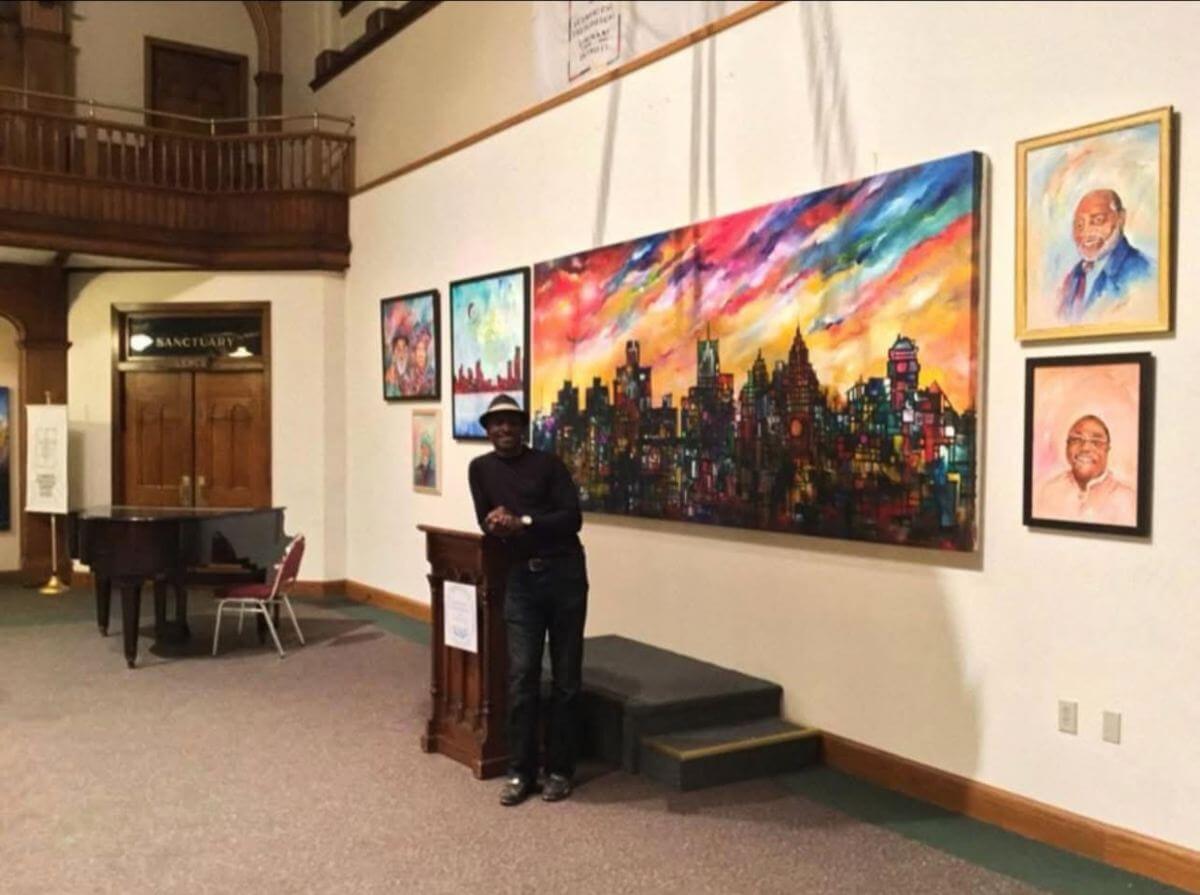
“I thought we were going to see the exhibit at the library.”
“The library?” “Certainly. One must dress respectfully in the presence of paintings.” “No, no, no,” laughed Timothy. “We’re going to the ball game.”
“Oh.” Froggy looked down at his shoes. “I was rather hoping for the exhibit.” “We may visit later if time allows.”
Froggy’s eyes brightened.
“Wonderful! We can admire the paintings before the game.”
“Actually,” said Timothy, “before the game we’re going to the restaurant for lunch.”
Froggy nodded thoughtfully.
“Well, Councilman, I do enjoy your paintings almost as much as modern food.”
Timothy raised an eyebrow.
“Thank you for the compliment, Mr. Froggy, but you don’t need to lie to kick it.” Froggy smiled sheepishly.
“Oh dear. You caught me.”
“I knew you wanted something.”
“Perhaps.” “What do you need?”
Froggy shuffled his feet. “I may require new paint brushes.”
Timothy laughed. “Did you chew the last set again?”
“There may have been an unfortunate misunderstanding between my artistic enthusiasm and the wooden handles.”
“All right,” said Timothy. “I’ll buy you new brushes.”
Froggy’s eyes grew as round as saucers. “Really?” “Really.”
“Oh, thank you, Councilman!”
“But first, go change clothes.”
Froggy looked down at his suit.
“What’s wrong with elegance?”
“It’s ninety-eight degrees outside.”
“So?” “So you’re dressed for Parliament, not baseball.”
Froggy sighed dramatically.
“Very well.” “And lose the tie.”
“My tie has feelings.” “It will survive.” “And the suspenders?”
“Especially the suspenders.”
Moments later, Froggy emerged wearing shorts, a T-shirt, and sandals. “Acceptable?” he asked.
“Much better.” Timothy sat beneath the shade of an oak tree reading a newspaper while Froggy admired a passing dragonfly. “What are you reading?” Froggy asked.
“The newspaper.” “People still buy those?” “A few of us old romantics do.” “But everything is online now.”
“Yes,” Timothy replied, folding the page, “although people seem to scroll more than they read.”
Froggy nodded.
“They hunt for noise but often miss wisdom.” Timothy looked at him.
“Why are you attacking human beings this morning?”
“I’m not attacking them,” said Froggy. “Humans are supposed to be the clever creatures, yet some seem determined to become taller while growing shorter in attention.”
Timothy laughed. “Mr. Froggy, that is an entirely different conversation.” “Probably a longer one too.”
“Indeed.” Froggy pointed toward Timothy’s shorts. “I like those, by the way.” “My wife bought them when we went camping.”
“Oh yes, I remember that trip. She has an excellent sense of color.”“She certainly does.” Froggy smiled.
“Everything she does is wonderful.”
“Oh, Mr. Froggy,” Timothy said teasingly, “you’re making her sound larger than life.”
Froggy’s expression softened.
“No, Councilman.” He looked toward the horizon.
“She is my lover, my lifeline, and my all in all.”
For a moment the wind itself seemed to stop and listen.
Timothy nodded slowly.
“You’re giving me something to think about.”
“You should write that down.” “I just might.”
“My lover, my lifeline, and my all in all.” “That sounds like a song.”
“Perhaps all true things eventually become songs.”
They climbed onto their bicycles and headed toward the city.
The farther they rode, the hotter the day became.
The sun blazed overhead like a giant furnace with ambitions.
Finally Froggy wiped his brow.
“Councilman?” “Yes?”
“Who has the thermostat today, God or the devil?” Timothy laughed.
“There are no thermostats in Heaven.” “Then someone forgot to tell the weather.”
Froggy fanned himself with his hat.
“Perhaps the Almighty is trying to toast the bad people.”
“The rain falls on the just and the unjust alike,” Timothy replied.
“Then the heat falls on the good horses and the bad horses?”
“Exactly.”
“And the good rabbits and the bad rabbits?” “Correct.”
“And the honest squirrels and the dishonest squirrels?” “Every last one of them.”
Froggy sighed.
“There is no selective blessing and no selective weather.”
“Afraid not.” “Well,” said Froggy, “someone still needs to turn down the sun.”
Timothy laughed.
“In the meantime we dress lightly, drink plenty of water, and stay in the shade when we can.”
“Perhaps,” Froggy suggested hopefully, “we should cancel the baseball game and visit an art gallery instead.”
Timothy smiled. “Nice try.”
“Worth asking.” “It was.”
“So we’re still going?”
“We’re still going.”
Froggy sighed with theatrical disappointment.
“Very well.” They rode on.
Past the trees. Past the shops.
Past the summer flowers leaning toward the sun.
And eventually they found themselves standing before the art exhibit on Woodward after all.
Froggy smiled triumphantly.
“You see, Councilman?” “What?”
“Art always finds those who are looking for it.”
Timothy looked at the paintings, then at his friend.
“And friendship,” he said, “usually finds us before we even know we’re looking.”
Froggy nodded.
“That sounds wiser than a frog should be allowed to sound.”
“Don’t tell anyone.”
Their laughter floated through the warm afternoon air while somewhere beyond the city the farmland waited patiently for their return.
And the sun, having overheard the conversation, seemed to soften just a little.
End of Chapter from Once Upon a Farmland
© 2020–2026 Timothy Orikri. All rights reserved.