There are times when I look at the world and wonder how far we have drifted from one another.
Somewhere beneath the noise of our civilization, beneath the sophistication of our technology and the endless stream of information at our fingertips, a darker current seems to be moving. It is a current fed by anger, division, cruelty, suspicion, and the quiet erosion of our regard for one another. We have become remarkably connected and, somehow, increasingly disconnected. We can communicate across continents in seconds, yet struggle to speak kindly to the person standing beside us.
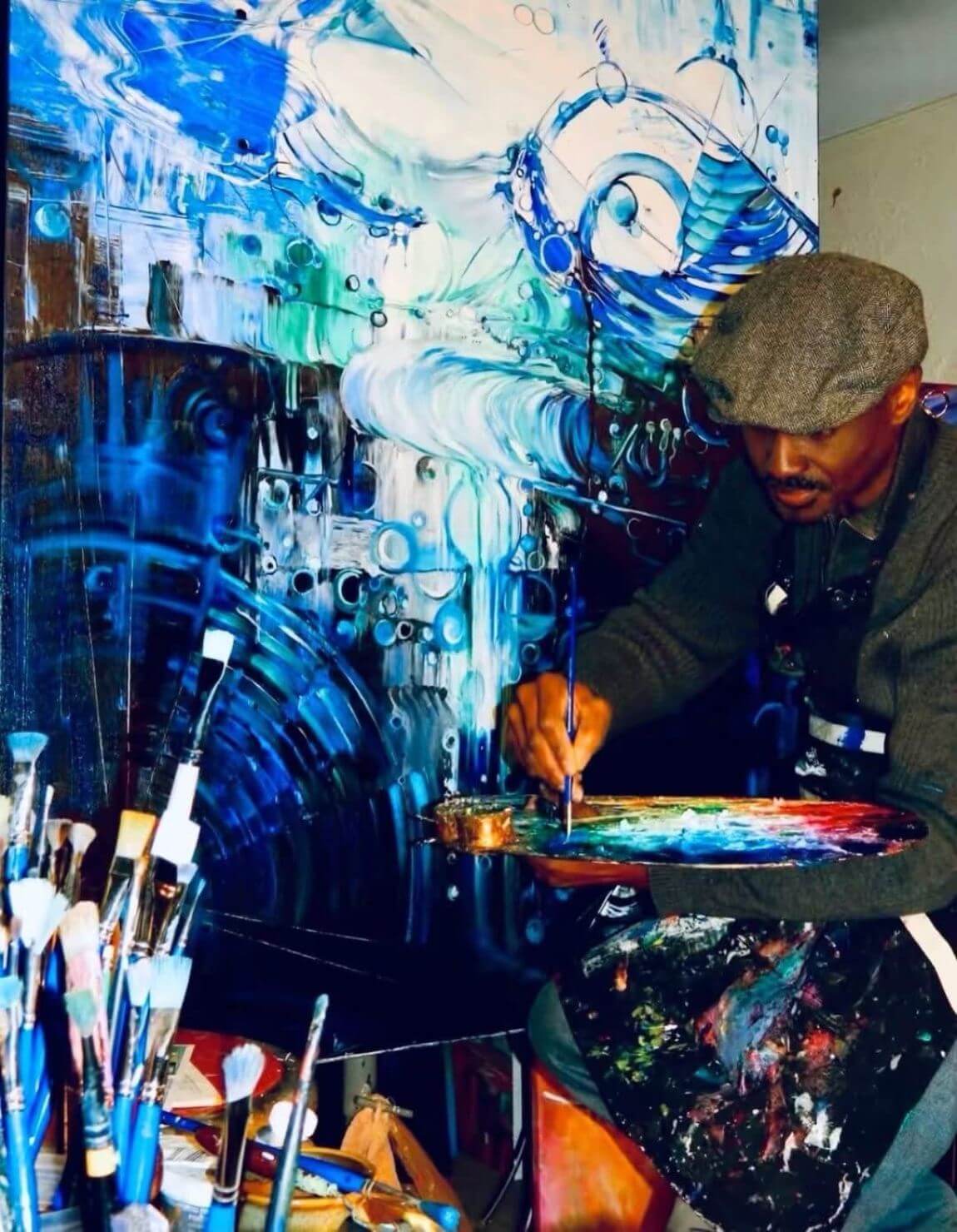
This is the darkness I began to paint.
“The Dark Drift” is not simply a painting of waves, water, or an imagined landscape. It is a painting about us. It is about the places within humanity where compassion has receded and fear has taken its place. It is about the undertow of resentment that can pull communities apart, the turbulence of unresolved pain, and the frightening ease with which people can begin to see one another as enemies rather than as fellow travelers through this fragile thing called life.
As a painter, I sometimes cannot say everything with words. So I reach for a brush.
I let color speak where language becomes inadequate.
The blues in this painting carry many voices. Blue can be tranquil, but it can also be lonely. It can whisper of peace while simultaneously holding the weight of sorrow. Here, the blue moves between those two worlds. The lighter passages feel almost like breath breaking through the surface, while the deeper blues descend toward something heavier—an emotional abyss where despair, confusion, grief, and hopelessness gather.
The canvas seems to drift between heaven and depth, between illumination and shadow, between creation and collapse.
That tension matters to me. Because life is rarely one color.
We are made of contradictions. We carry joy and grief in the same heart. We can be capable of extraordinary tenderness and inexplicable cruelty. We build magnificent things and sometimes destroy what we have built. We reach toward one another, and then, inexplicably, we turn away.
The swirling forms in “The Dark Drift” become my visual language for this human turbulence. Nothing remains still. Lines collide, currents bend, shapes emerge and disappear. The eye is continually invited forward, then pulled sideways, then drawn downward. It is the sensation of being caught inside circumstances larger than ourselves—trying to find direction while the current keeps changing.
And perhaps that is what I mean by “the drift.” Drifting does not always announce itself. Sometimes we drift slowly.
We drift in our conversations, when civility gives way to contempt.
We drift in our communities, when suspicion replaces neighborliness.
We drift in our families, when pride becomes more important than reconciliation.
We drift in society, when another person’s suffering becomes someone else’s inconvenience.
And eventually, if we are not careful, the drift becomes the direction. That is what concerns me.
We live in an age of unprecedented access to knowledge, yet knowledge does not automatically produce wisdom. Technology has made the world smaller, but it has not necessarily made the human heart larger. We have more ways to speak than ever before, yet sometimes less willingness to listen. We have more information, but perhaps less patience to understand.
The problem is not that humanity lacks intelligence. Perhaps what we lack, at times, is tenderness.
“The Dark Drift” therefore becomes more than an observation of darkness; it becomes a question.
What happens when we allow ourselves to drift too far? And just as importantly: Can we find our way back? I believe we can. That belief is hidden inside this painting.
Look closely at the lighter blues, the turquoise passages, the pale currents moving through the composition. Even within the darkness, something continues to move toward light. The canvas may descend into deep blues, but it does not surrender entirely to blackness. There are openings. There are glimmers. There are places where color seems to breathe again.
That is intentional.
Because even when I paint darkness, I refuse to believe darkness is the final word. Creation, after all, is not static.
Creation is movement.
It is breaking apart and coming together. It is becoming, unbecoming, and becoming again. It is the mysterious process by which something can emerge from what appears to be nothing. And perhaps humanity is still somewhere in that process—unfinished, imperfect, struggling, learning, falling, rising, and being remade.
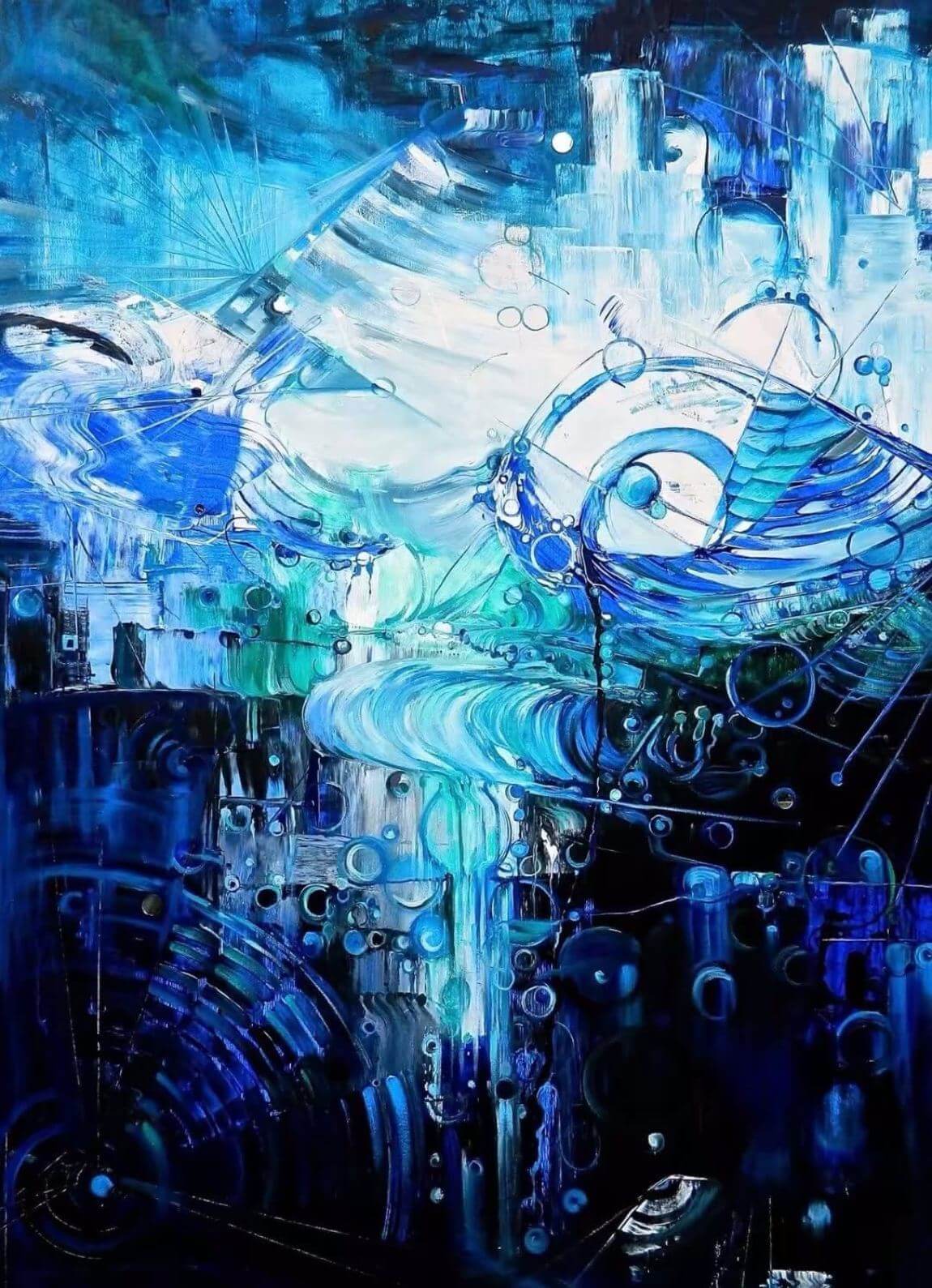
That is why I call this work part of my Creation Story Series.
Creation, to me, is not merely about how the world began. It is also about how the world can begin again. A community can begin again.
A family can begin again. A wounded heart can begin again. A society can begin again.
Sometimes renewal begins with something as seemingly small as one person deciding to be kind when kindness is unpopular. One person choosing compassion instead of contempt. One neighbor deciding to check on another. One stranger extending grace. One family choosing forgiveness. One community choosing to rebuild trust.
Perhaps restoration does not always arrive like a thunderclap. Perhaps it begins quietly.
One heart at a time. One family at a time. One neighbor at a time. One neighborhood at a time. One city at a time. One community at a time.
As a painter, I have learned that transformation rarely happens with one stroke. A painting becomes itself through layers—transparent washes, deliberate marks, accidental discoveries, corrections, textures, colors placed beside colors that somehow make each other more meaningful.
Perhaps people are like that too. Perhaps societies are. We are layered beings.
And maybe the work before us is not to erase every dark mark, but to learn how to paint something beautiful alongside it.
That is my hope.
I want to believe that compassion can become contagious. That love can travel farther than hatred. That empathy can interrupt the cycle of division. That we can rediscover the simple dignity of seeing another human being not as a category, a political opponent, a stranger, or an inconvenience—but as a life carrying its own unseen story.
So yes, “The Dark Drift” is a painting about darkness. But it is also a painting about resistance.
It is my quiet refusal to surrender the canvas to despair.
The dark currents may be real. The turbulence may be real. The wounds in our society may be deep. But so is our capacity to heal, to change, to create, to forgive, and to begin again.
There is still light beneath the surface. There is still movement. There is still breath. There is still creation. And as long as there is creation, there is possibility.
So I keep painting. I paint the darkness because I have seen it. I paint the turbulence because I have felt it. I paint the beauty because I still believe in it.
And I paint the light because I refuse to stop looking for it. Perhaps that is what this painting ultimately asks of us:
Do not surrender to the drift.
Find your current. Find your compassion. Find your courage. And wherever you are, begin creating again. Because even in a world that sometimes seems to be losing its way, I still believe there is hope.